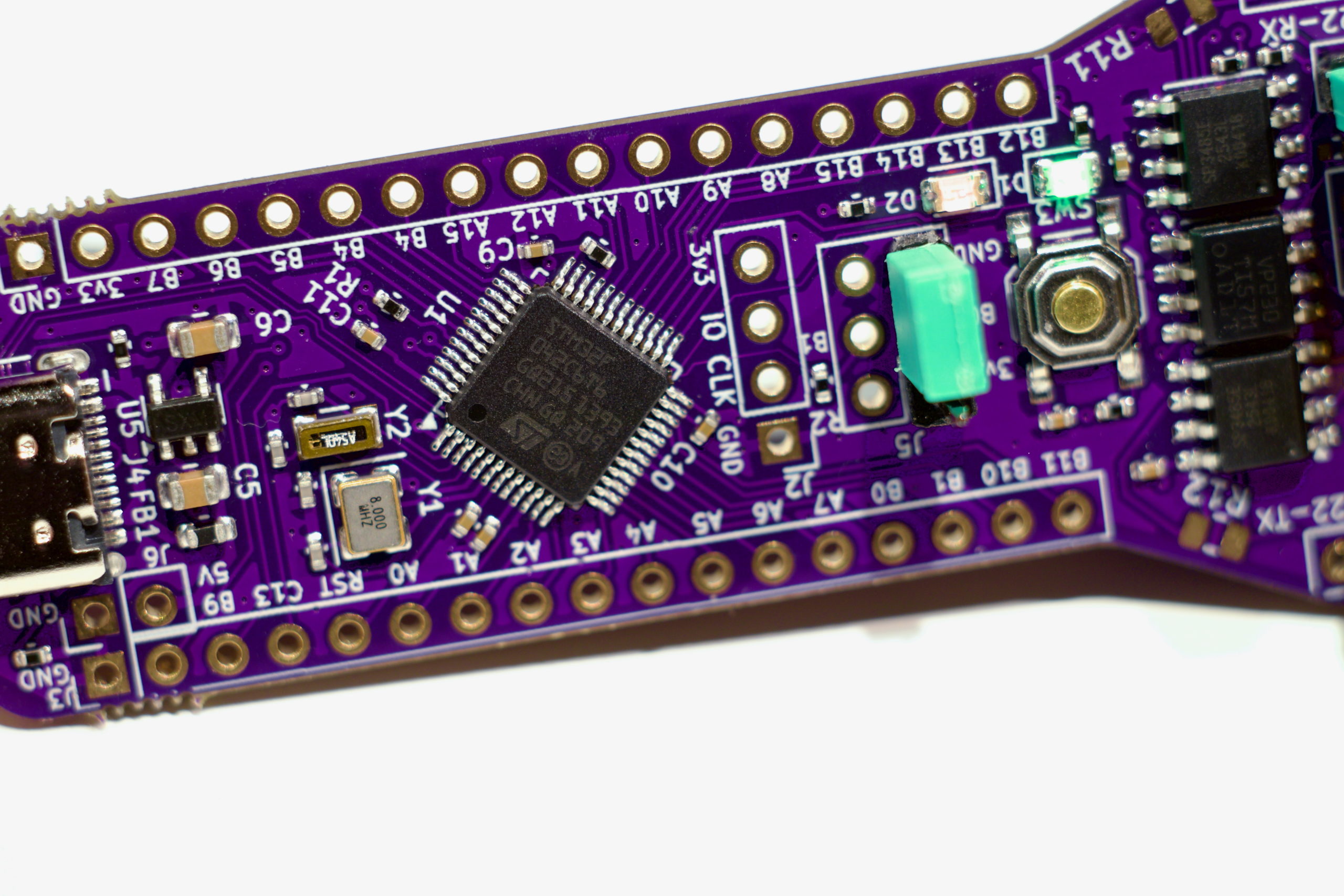
At first glance, TouCAN Probe looks like a clean, compact USB-to-CAN / RS-485 / RS-422 interface.
But that’s underselling it.
Because under the hood, this thing is a fully capable STM32 development board that just happens to have industrial-grade differential transceivers attached.
And that changes everything.
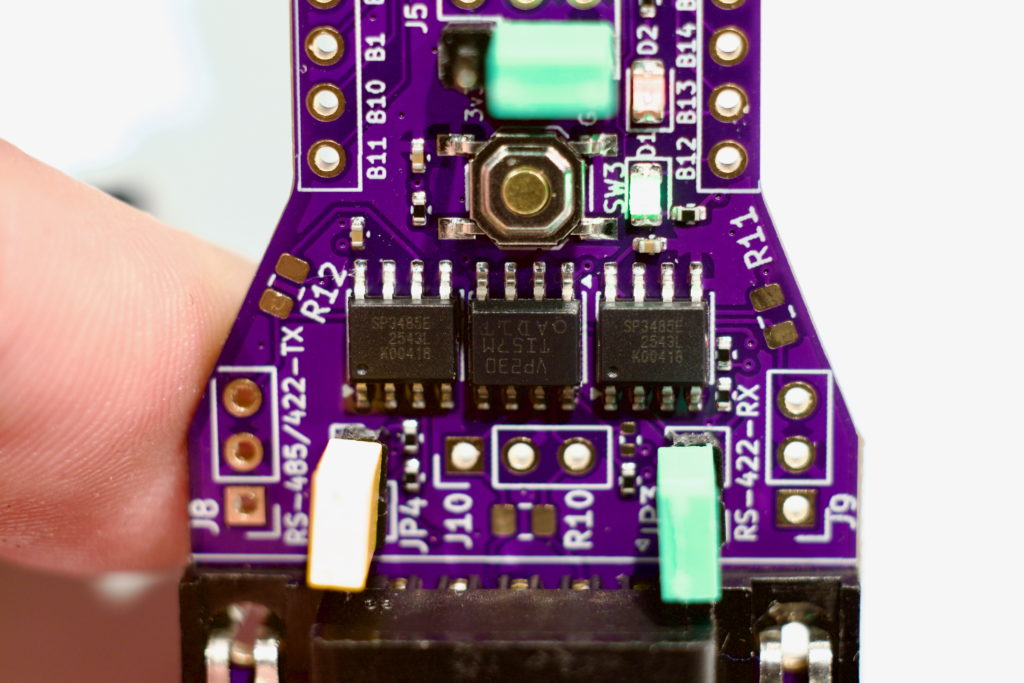
The Core: A Real MCU, Not a Bridge Chip
TouCAN Probe is built around the STM32F042C6Tx — not a USB bridge, not a fixed-function CAN controller.
That means:
- Native USB FS device
- Flexible firmware architecture
- Direct control over peripherals
- Access to GPIOs
- SWD programming header
- Real-time performance under your control
This isn’t a “dongle.”
It’s an embedded system that ships as a tool.
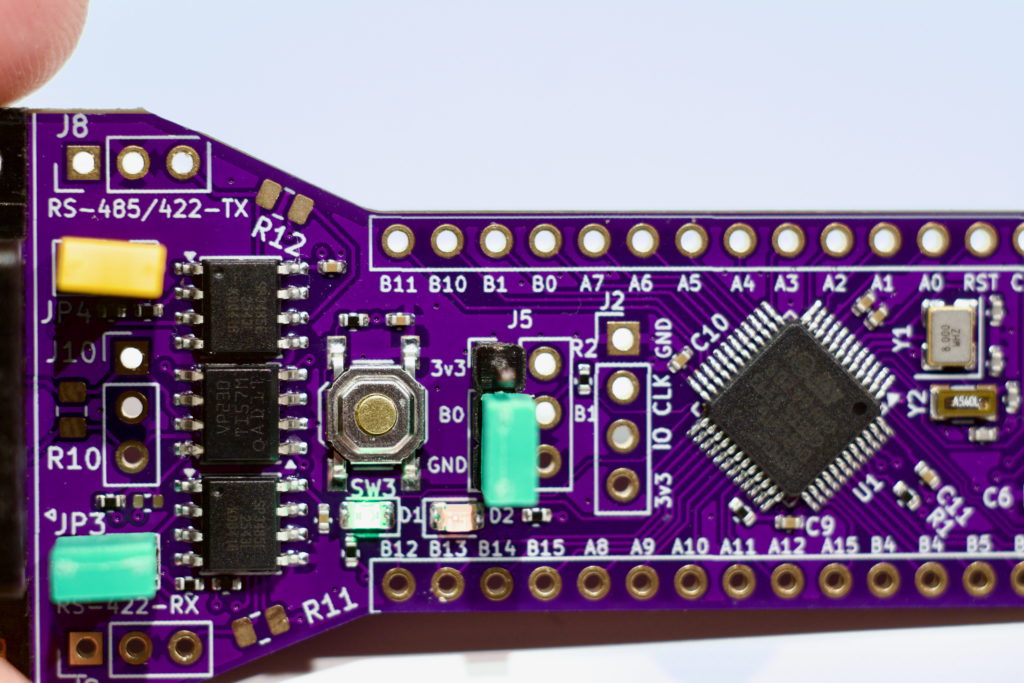
It’s a Development Board in Disguise
Because the MCU is fully exposed and programmable, TouCAN Probe can double as:
- A general STM32 development board
- A USB device prototyping platform
- A CAN firmware sandbox
- A serial protocol analyzer
- A bus traffic generator
- A custom USB instrument
You have access to:
- USART (PB6/PB7 exposed)
- GPIOs via headers
- Boot configuration pins
- SWD for full debugging access
Need a quick USB-controlled relay?
Need a CAN bootloader test platform?
Need a custom USB descriptor experiment?
You already have the hardware in your hand.
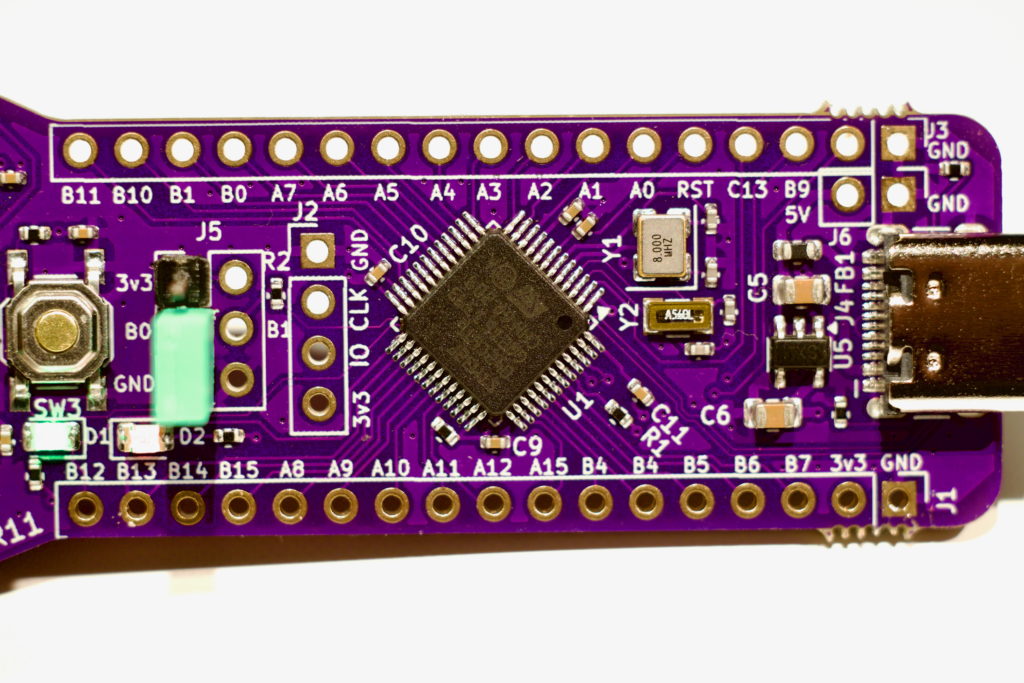
Could It Be an ST-Link?
The fun thought experiment:
With the right firmware, could TouCAN Probe act as an ST-Link compatible programmer?
The STM32F042C6Tx absolutely has the capability to implement:
- SWD signaling
- USB composite devices
- Debug transport protocols
An official ST-Link uses a more powerful STM32 variant, but architecturally there’s nothing preventing a firmware implementation of a CMSIS-DAP or similar debugger stack on this hardware.
Meaning:
- It could program other STM32 targets
- It could become a debug bridge
- It could act as a USB-to-SWD tool
- It could be a lab emergency programmer
The hardware already exposes the right primitives.
That’s the beauty of building your own tools.
Mode Switching: Intentional and Clean
At reset:
- JP4 closed → USB enumerates as CDC (USART1 → RS-422/485)
- JP4 open → USB enumerates as GS_USB CAN
After reset, jumpers can be reconfigured freely.
Default RS-422 full duplex:
Short JP3 & JP4
And when in CAN mode, USART1 (PB6/PB7) is still accessible externally.
So even in “CAN adapter” mode, you still effectively have a development board with serial IO available.
Hardware That Supports the Ambition
This isn’t a breadboard hack.
CAN transceiver: SN65HVD230
RS-485/422 transceivers: SP3485EN (x2)
LDO: MIC5504-3.3
Board: 4-layer FR4 (~1.6 mm)
EDA: KiCad 9
You get:
- Controlled impedance routing
- Solid ground planes
- Clean USB layout
- Industrial-grade differential signaling
- Production-ready manufacturing files
It’s engineered like a deployable product — not just a lab experiment.
Endless Possibilities
When you combine:
- Native USB device
- CAN + RS-485 + RS-422 hardware
- Exposed GPIO
- SWD header
- Bootloader access
- Open hardware design
You get a platform that can evolve.
Today:
- USB-to-CAN
- USB-to-RS-485
- USB-to-RS-422
Tomorrow:
- Custom CAN protocol analyzer
- Firmware-based CAN bridge
- USB composite device (CDC + CAN)
- Field firmware updater
- Bus intrusion test tool
- Portable automation interface
- Emergency ST-Link-style programmer
Or something no one has thought of yet.
Why This Is Actually Cool
Most adapters are fixed-purpose appliances.
TouCAN Probe is a tool platform.
It reduces lab clutter.
It collapses multiple dongles into one device.
It exposes its internals instead of hiding them.
It invites firmware experimentation.
And if you’re the kind of engineer who likes understanding — and controlling — your tools, that’s the real win.
Because the best hardware tools aren’t just interfaces.
They’re multipliers.